News

USGS National Water Availability Assessment Webinar

USGS National Water Availability Assessment Webinar

Date: Wednesday, May 21, 2025

Time: 3:00 PM – 4:00 PM EST 

Location: Microsoft Teams Webinar

Join the USGS Water Resources Mission Area for a briefing on the National Water Availability Assessment, a pioneering scientific overview of water availability across the conterminous United States. This new assessment is the first of its kind, offering new insights on where there is a potential imbalance between water supply and demand in the United States. The assessment uses state-of-the-art models to fill in gaps between monitoring sites and sampling events and integrates information on water quantity, quality and use for a more comprehensive understanding of water availability. The findings of the National Water Availability Assessment can be explored by reading the report, retrieving data from the user-friendly National Water Availability Assessment Data Companion, and touring the supplemental data visualization website. During this virtual event, attendees will learn about the key findings of the Assessment and how to access the data, hear stories of USGS water availability science across the country, and have the opportunity to ask questions of the team behind this effort. Register by clicking the button below or by copying and pasting the direct link into your web browser.
Register
Direct link for registration: https://events.gcc.teams.microsoft.com/event/596e6c86-cc0f-4c9c-bd24-1b9a582bcb02@0693b5ba-4b18-4d7b-9341-f32f400a5494

WRC hosts a Judicial Education Program for Washington State judges

The WRC hosted a two-day program on Water Sciences for Washington State Judges at the end of March. Faculty from WSU CAHNRS School of Economic Sciences, Biological Systems Engineering, CAHNRS-CAS School of the Environment, VCEA Civil and Environmental Engineering, and faculty from the University of Washington School of Aquatic and Fisheries Sciences led discussions on surface and groundwater hydrology, water use, anadromous fisheries science, hydroecology and water quality, irrigation science, agricultural economics, municipal water use and measurement, and the implications of climate and demographic change on water security and scarcity.

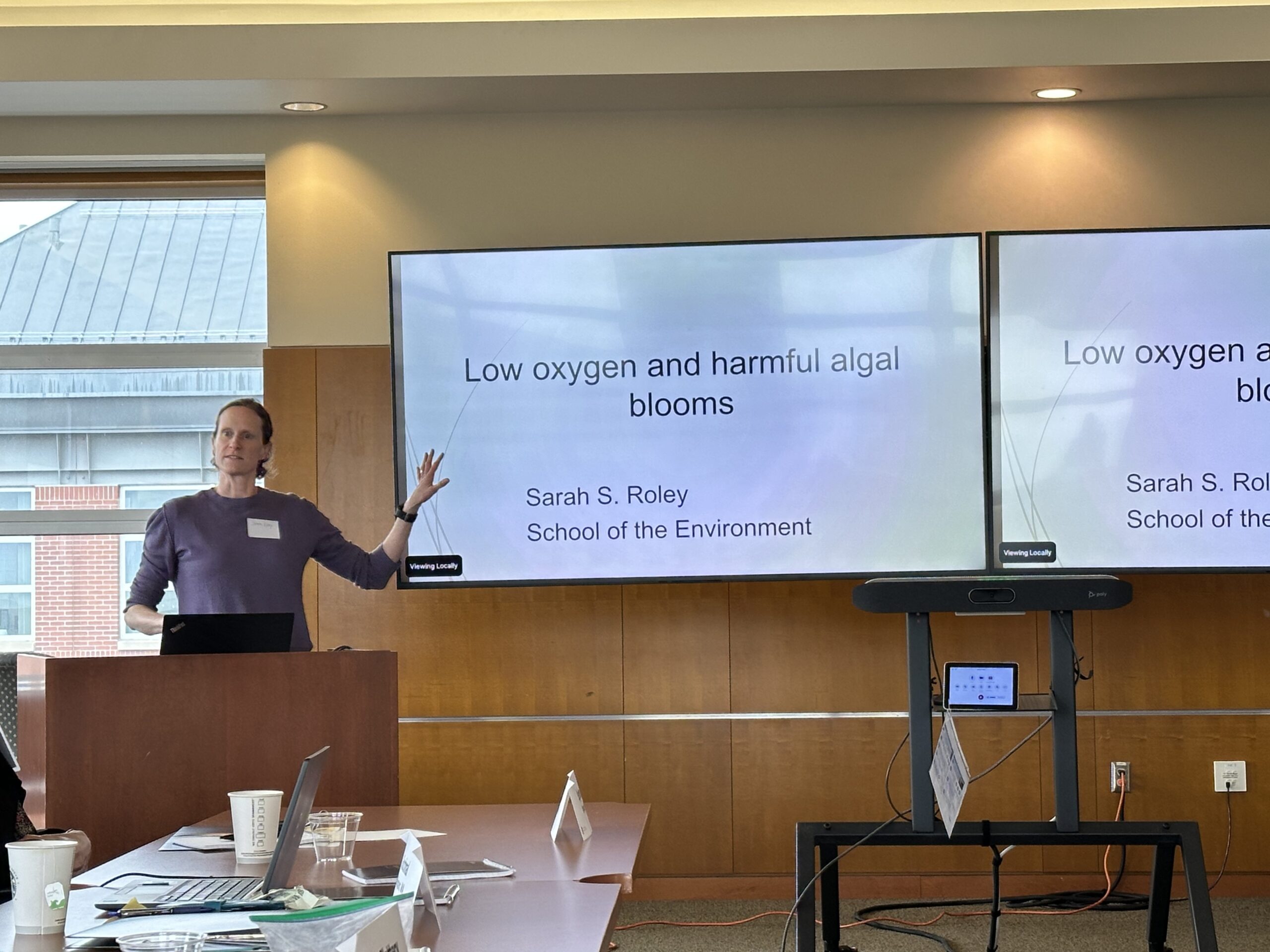
Dr. Sarah Roley discusses the science of Harmful Algal Blooms.
Dr. Sarah Roley discusses the science of Harmful Algal Blooms. Credit: Washington State Administrative Office of the Courts.

The WRC co-developed the program in collaboration with the National Judicial College (NJC) through their Dividing the Waters Program. “What impressed me and the Judges last week was how all of the diverse water science topics were all connected. Each topical discussion contributed to our broader understanding of how water sciences interact with each other and with the communities that rely on water”, said Alf Brandt, co-organizer of the program and Associate Director of Justice Solutions and Innovation at NJC and Dividing the Waters Staff. “The faculty had thought carefully about how judges use and need science in their water cases,” he said.

The second day of the program was a field trip that included visits to Lower Granite Dam on the Snake River, wetlands, irrigation projects, water treatment facilities, and conversations with a water bank manager. All judges attended, three faculty, and three WSU graduate students.

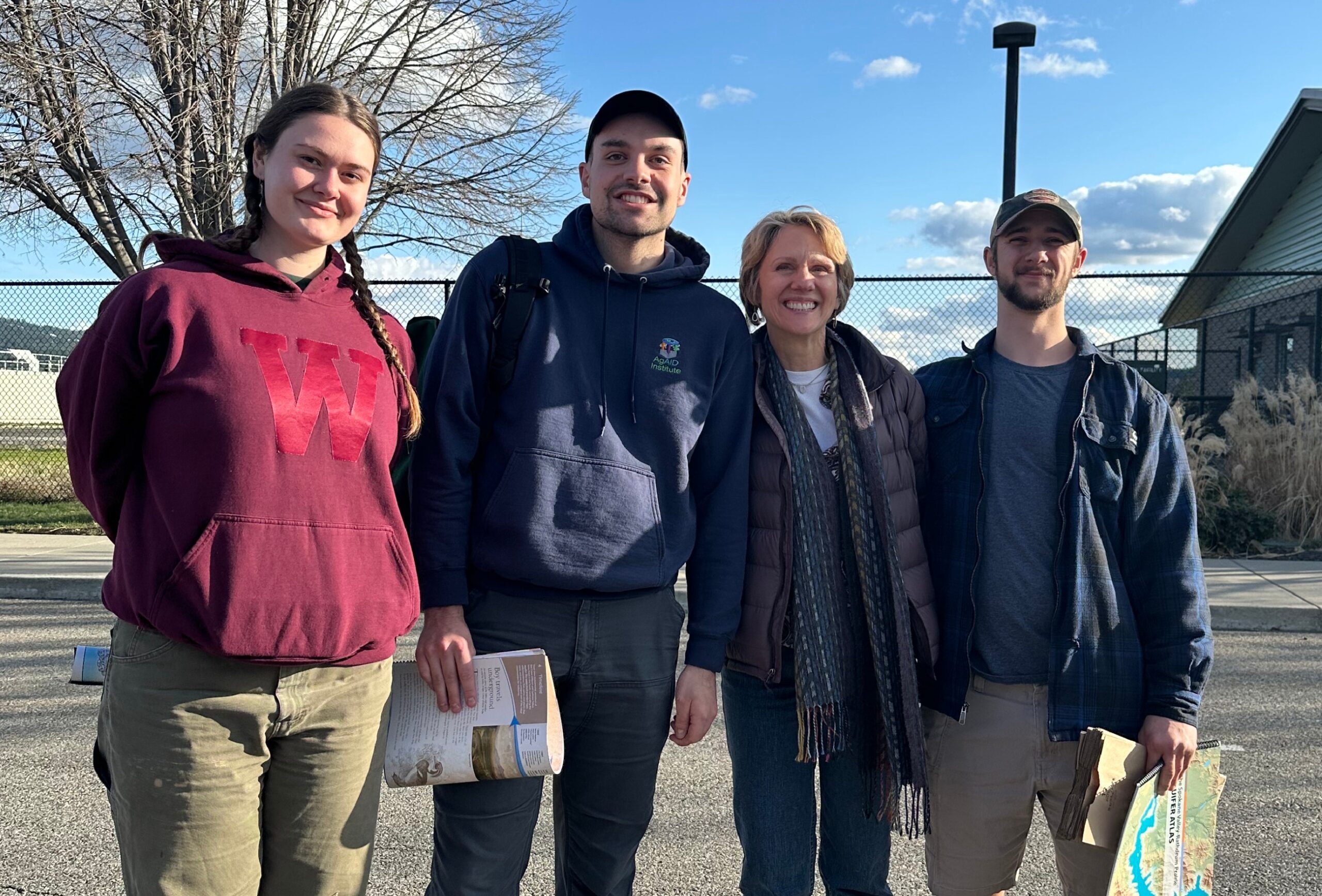
Graduate students (left to right) Sarah Hewitt (VCEA CEE), Jacob Gifford (CAHNRS SES), and Elijah Moser (VCEA CEE) with Washington State Chief Justice Debra Stephens at the Spokane County Water Resource Center. Credit: Washington State Administrative Office of the Courts.

Faculty and student contributors