Abstract: Phosphorus (P) is often a limiting nutrient in watersheds and excess is often linked to harmful algal blooms (HABs) and changes in microbial diversity, which threaten overall ecosystem health and aquaculture facilities. Glyphosate, the active ingredient in the herbicide Roundup, also contributes to total P budgets. However, the extent and impact of P and glyphosate transport within the Spokane River watershed remains unclear. Understanding drivers of HABs and pathogens in this watershed is important given the region’s hatcheries, which play a critical role in salmon reintroduction. Our research will address this knowledge gap by surveying temporal P dynamics including glyphosate transport, and changes in bacterial diversity in the two major tributaries of the Spokane River: Hangman Creek (HC) and the Little Spokane River (LSR). We hypothesize that P and glyphosate loads in HC and LSR will fluctuate seasonally, and these changes will influence the microbial community, especially HAB-forming species and opportunistic fish pathogens. We will work with local agencies to collect water samples weekly from three sites: upstream and downstream of the Spokane Hatchery on LSR, and downstream of a proposed hatchery site on HC. All samples will be analyzed for anions, dissolved metals, total dissolved phosphorus, glyphosate, and bacterial diversity. This will establish a framework that integrates chemical and microbial analyses at high temporal resolution to assess phosphorus cycling and its ecological effects in the Spokane River, and could be expanded in the future. Our results will be shared with stakeholders, and will inform water management and hatchery practices.
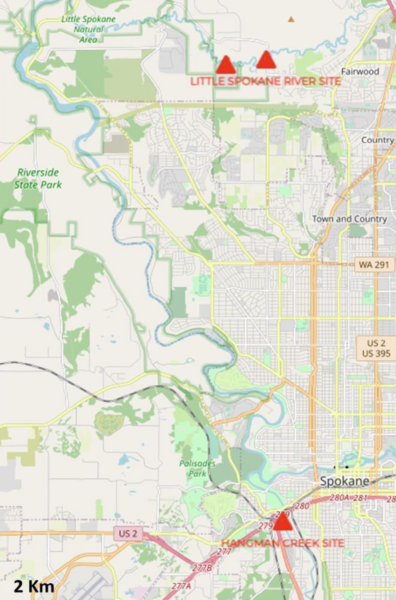
tributaries of the Spokane River