NSF FEW Workshop: Addressing the Food-Energy-Water System Trilemma: Balancing Reliance on Technological and Institutional Solutions
7-9 October 2015 | W Seattle Hotel, 1112 4th Ave. | Seattle, WA
Food, energy and water (FEW) resources often are tightly coupled making integrated management a complicated and difficult task. In the face of rapid human development and climate change, it has become critical that FEW systems be managed in sustainable way. Research addressing links among food, energy and water (FEW) issues is expected to be a top priority for WSU and major funding agencies in the coming years. In response to this emerging research priority area, the Center for Environmental Research Education and Outreach (CEREO), the State of Washington Water Research Center (SWWRC) and the Center for Sustaining Agriculture & Natural Resources (CSANR) hosted a NSF-sponsored workshop to identify and energize high-priority FEW research initiatives.
Organizers:
Julie Padowski
Center for Environmental Research, Education and Outreach (CEREO)
State of Washington Water Research Center
Jennifer Adam
Civil & Environmental Engineering
State of Washington Water Research Center
Stephanie Hampton
School of the Environment
Center for Environmental Research, Education and Outreach (CEREO)
Chad Kruger
Center for Sustaining Agriculture and Natural Resources (CSANR)
Jonathan Yoder
School of Economic Sciences
State of Washington Water Research Center
Workshop Overview
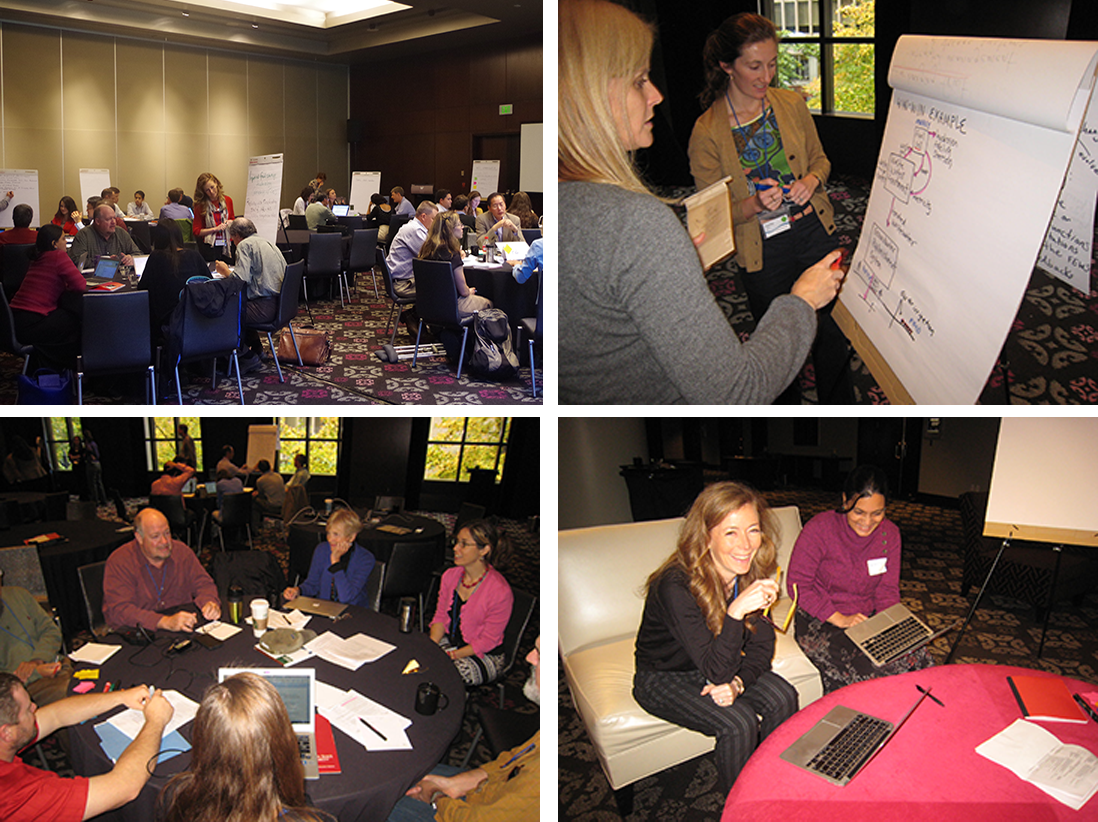
The three Centers organized one of multiple FEW workshops supported by NSF in Fall 2015 to help identify future opportunities for aligning their proposed $75M investment in FEW research. This 2.5 day workshop, entitled “Food-Energy-Water (FEW) System Trilemma: Balancing Reliance on Technological and Institutional Solutions” brought together 30 academic faculty, agency personnel, and resource managers to identify challenges and sustainable pathways for dealing with trade-offs and resolving conflicts associated with FEW systems through an integration of technological and institutional/policy solutions.
As part of this workshop, the Centers along with the Office of Research, hosted an evening banquet reception with workshop attendees and local community members to engage the broader public in FEW issues. The guest speaker at this event was Paul Roberts, author of the books The End of Oil and The End of Food.
Outcomes from this workshop were released in a white paper (see below).